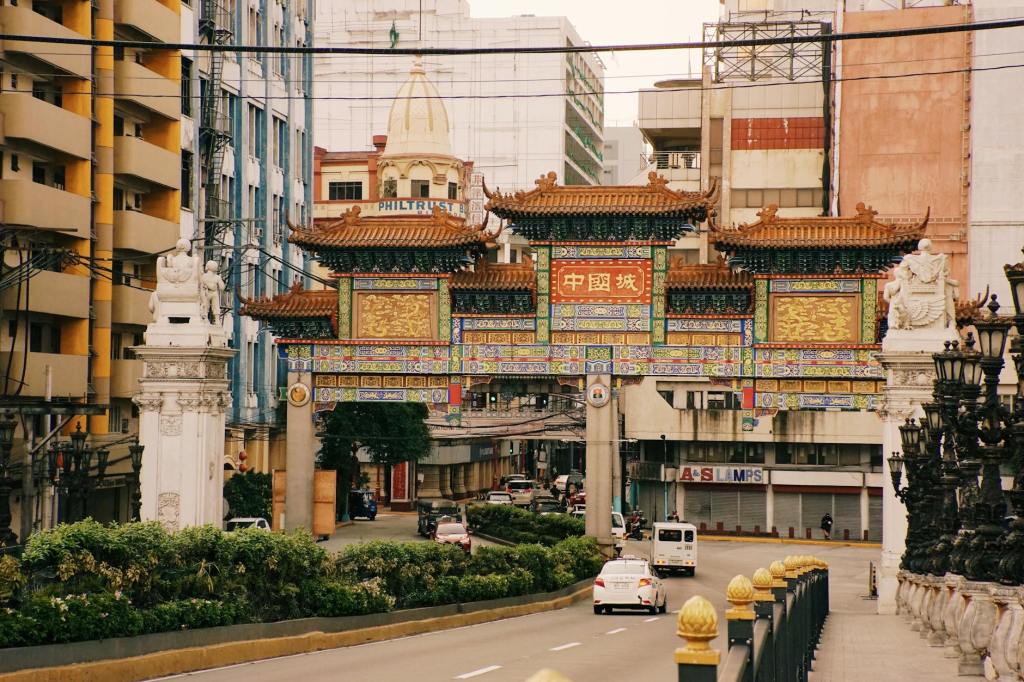
My maternal grandparents were hailed from Manila. My late grandfather, Papa, as we call him Luis A. Lim, a master electrician, had several clients in the said city. Since I grew up with my grandparents, they take me wherever they are. One remarkable one for me was the Gocheco Building in Binondo. I was maybe five or six years old when he started bringing me to Gocheco where my ninangs are (who are pure Chinese and Chinese-Filipino or Chinoy), and we often attend the building administrators’ Christmas Parties, Chinese New Year parties, and many other gatherings. Once or twice a week, Papa would take me to Gocheco and I would play with his colleagues there or other friendly residents while he checked electric wires and other sections of the building that needed tending to.
Since we usually commute (this was probably before the owner-type jeep of Papa), I was exposed to walking along the streets of Binondo, Tondo/Abad Santos, and Sta. Cruz, Manila. All credit to Papa for making sure I become street-smart, especially growing up. While my grandparents grew up and studied in Manila, Papa already bought land in Valenzuela (where I was born and raised) during his years of being an OFW in Saudi.
Sidenote: If you can imagine an OFW wearing a maong or denim jacket, gold necklaces, gold rings, a Seiko watch, with matching Ray-Ban eyeglasses, that’s how Papa was once. Hehehe.
But he continued other electrician-related jobs in Manila since he already built his network before he officially went full-time at the Quad Alpha Centrum Building in Mandaluyong as a Building Administrator for 20 or so years until he retired at age 65 and became a consultant until age 72. My memories in Gocheco and the streets of Binondo weren’t as vivid as the ones I have in Valenzuela and Laguna (where I also lived and studied for 2 academic years) but I have become more familiar with the streets of Manila and its history when I attended college at the Far Eastern University (FEU) in the 2000s and when I started working in the same city and transferred residence permanently in 2014.
A decade since then, living in Manila has been a delightful experience for me. It’s near everything. If you are like me who was from quite far north of the Metro, you know that it is a bit challenging if public transport is not available or accessible. You also need to travel far to get access to good hospitals, malls, and other amusement parks, and other specialty stores; hence, in another story, the reason why I am proud of how Valenzuela City has become now—it has been developed to be one of the nicest cities to live in Metro Manila. I found myself enjoying Manila more since it has many great places to visit like the National Museum, the National Library, Intramuros and Fort Santiago, the Metropolitan Theater, Luneta, and many others. I have always liked exploring museums since I am keen on knowing history. I’ve read so many history books and even banned books about the lives of people, cultures, and other related materials. I have always been fascinated by the works of Ambeth Ocampo, Nick Joaquin, Leon Ma. Guerrero, and other historians, novelists, and authors.
Of course, I am one of those who research the famous streets of Manila, their history, and other stories enveloping them. Hence, it was a great experience for me that we were able to explore Chinatown, through the Chinatown Museum, which we have learned that we are still part or resided in even though we are not in Binondo per see.

According to the friendly museum tour guide, Kuya Rey, who by the way also great at taking photographs, this map depicts the whole of Chinatown. Nowadays, we only believe that Binondo = Chinatown. So, whether you are from Tondo, San Nicolas, or Sta. Cruz, and Quiapo, you belong to Chinatown, Manila.
We also saw some remarkable stores in the town, especially during the 1800s and the early 1900s since Manila was the center of trade and commerce. They are incredibly educational especially if you have children below 10 years old as they can also see and explore other old/vintage items that Filipinos used in the past like typewriters, flat iron, ceramics, stereograph (which my son believes it’s an old VR-like tool), old Chinese-Filipino newspapers, telephone, radio, and other essential household items.

It was a great sight to see the collections and other galleries that depict the old Chinatown. It takes you back to how it was before and how rich the history of old Manila was.
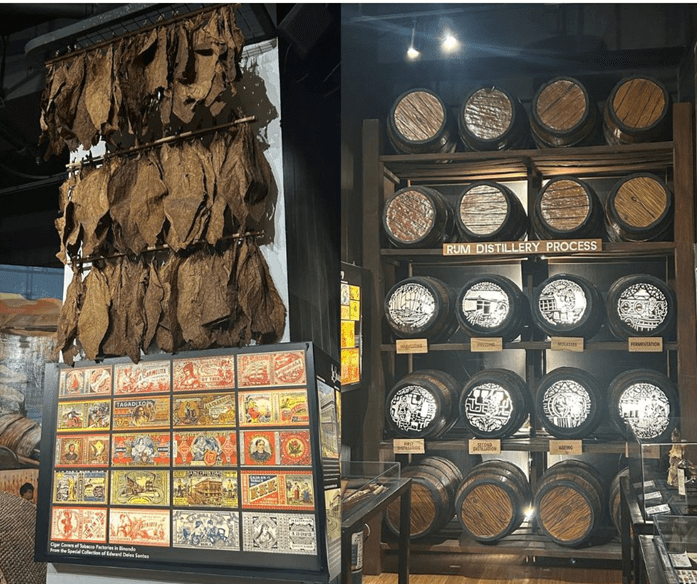


It was kind of nostalgic to see displays and other delicacies that we also enjoy today like Polland Hopia. It was extra delightful to know that we were all able to survive the pandemic, may it be the business or the people.

We were surprised to discover what public transportation in Manila was like before. We still see kalesa in Luneta and Intramuros these days but this tram or Tranvias de Manila is a first for us to see and it can carry at least 20 people (sampuan like a jeep). Nice to see how our public transportation has grown and eventually got stuck. Charot! According to Chinatown Museum, many of the trams were destroyed in World War II (WWII). Instead of rehabilitating, the trams were replaced by other modes of transportation like the jeepneys we still have today.
There is just so much more you can discover in the Chinatown Museum, take time to also read the information given in the collections and galleries. Your friendly tour guides like Kuya Rey can give you more details, especially about the items in the available collections. Through him, we were able to see that the vintage typewriter is still working, and its ribbon hasn’t been changed since 1945! He also let us try the stereograph and see its wonder; we were also able to smell herbs and spices like the cinnamon harvested in 2019 versus the one in 1910. Amazing how the aroma of the latter is stronger than the one from five years ago. Do not touch or try the items without proper guidance or authorized personnel.
Tickets are available on-site:
- Regular: Php 150.00
- Senior Citizen or PWD: Php 120.00
- Student: Php 100.00
The mode of payment can be through Cash or GCash (I’m not sure if they accept Credit/Debit Card payments). The Chinatown Museum is located at the 4/F Imperial Wing, Lucky Chinatown, Reina Regente Street, Binondo, Manila.
More information about the museum can be found here: https://www.chinatownmuseum.org/ or https://www.facebook.com/ChinatownMuseum.
See you in Manila!

 Shainne Hostalero
Leave a comment